
Sleep Apnea Treatment
Custom oral appliances to help you breathe better, sleep deeper, and wake up actually rested.
Sleep apnea is more than loud snoring. It’s a serious condition where your breathing repeatedly stops during the night, cutting off oxygen to your brain and body — often without you realizing it.
Left untreated, sleep apnea raises your risk of heart disease, stroke, high blood pressure, and diabetes. Day-to-day, it leaves you tired, foggy, and short-tempered no matter how many hours you spend in bed.
If you struggle with a CPAP machine — or have mild to moderate sleep apnea — a custom oral appliance can be an effective, comfortable alternative. We work with your sleep physician to make sure the treatment fits your diagnosis.
A Dental Solution for Better Sleep
A lot of people with sleep apnea simply can’t tolerate a CPAP. They’re loud, they take up half the nightstand, and they’re a hassle to travel with. Compliance rates are low for a reason.
Oral appliances are a quieter, simpler alternative. They’re custom-made to fit your mouth, easy to wear, easy to clean, and small enough to throw in a bag. Most patients adjust within a couple of weeks and actually keep using them.
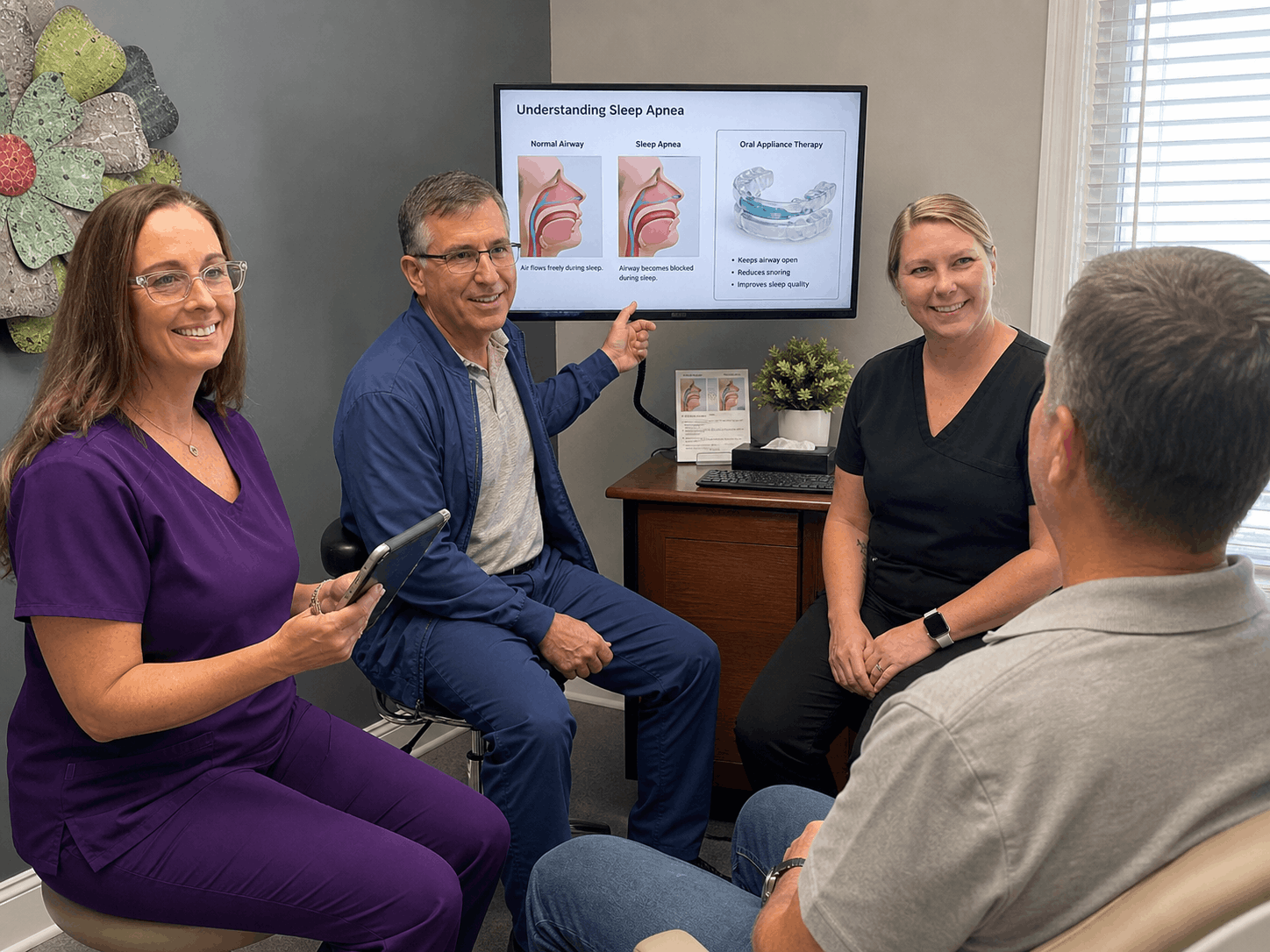
By gently repositioning your jaw during sleep, the appliance keeps your airway open. That means fewer breathing pauses, less snoring, and the kind of restful sleep that lets you wake up feeling like yourself again.
Signs You Might Have Sleep Apnea
Loud Snoring
Chronic, disruptive snoring — often loud enough to wake a partner.
Daytime Fatigue
Persistent tiredness even after a full night's sleep.
Morning Headaches
Frequent headaches when you wake up that ease as the day goes on.
Gasping or Choking
Waking suddenly short of breath or choking during the night.
Difficulty Concentrating
Brain fog, forgetfulness, or trouble focusing during the day.
Restless Sleep
Tossing, turning, or waking repeatedly through the night.
Common Questions
Sleep apnea is a condition where your breathing repeatedly stops and starts during sleep — often dozens or hundreds of times a night. The most common form, obstructive sleep apnea, happens when the soft tissues in the back of your throat collapse and block your airway. Each pause briefly wakes your brain, which is why people with sleep apnea feel exhausted even after a long night in bed.
Custom oral appliances — a treatment dentists are trained to provide — gently shift your lower jaw forward during sleep to keep your airway open. For mild to moderate obstructive sleep apnea, the American Academy of Sleep Medicine recognizes oral appliance therapy as a first-line treatment option. We work with your sleep physician to make sure the appliance is appropriate for your case.
An oral appliance looks similar to a sports mouthguard or orthodontic retainer. It’s custom-made from impressions of your teeth and worn only during sleep. The device repositions your lower jaw slightly forward, which keeps the airway open and prevents the throat tissues from collapsing. Most patients find them comfortable to wear within a week or two.
For mild to moderate sleep apnea, oral appliances are highly effective and patients are far more likely to actually use them every night — which often makes them more effective in real-world terms. For severe sleep apnea, CPAP is generally still recommended as the first option, though oral appliances can serve as a backup for travel or nights when CPAP isn’t tolerated.
Yes. A diagnosed sleep apnea case (from a sleep study ordered by a physician) is required before we fit an oral appliance. The sleep study confirms the diagnosis, identifies the severity, and rules out other sleep disorders. If you haven’t had one, we can refer you and coordinate care from there.
Ready to Sleep Better?
Schedule a consultation. We’ll review your sleep study (or help you get one), evaluate whether an oral appliance is a good fit, and walk you through cost, insurance, and what to expect.